August 19, 2026 · 11 min read
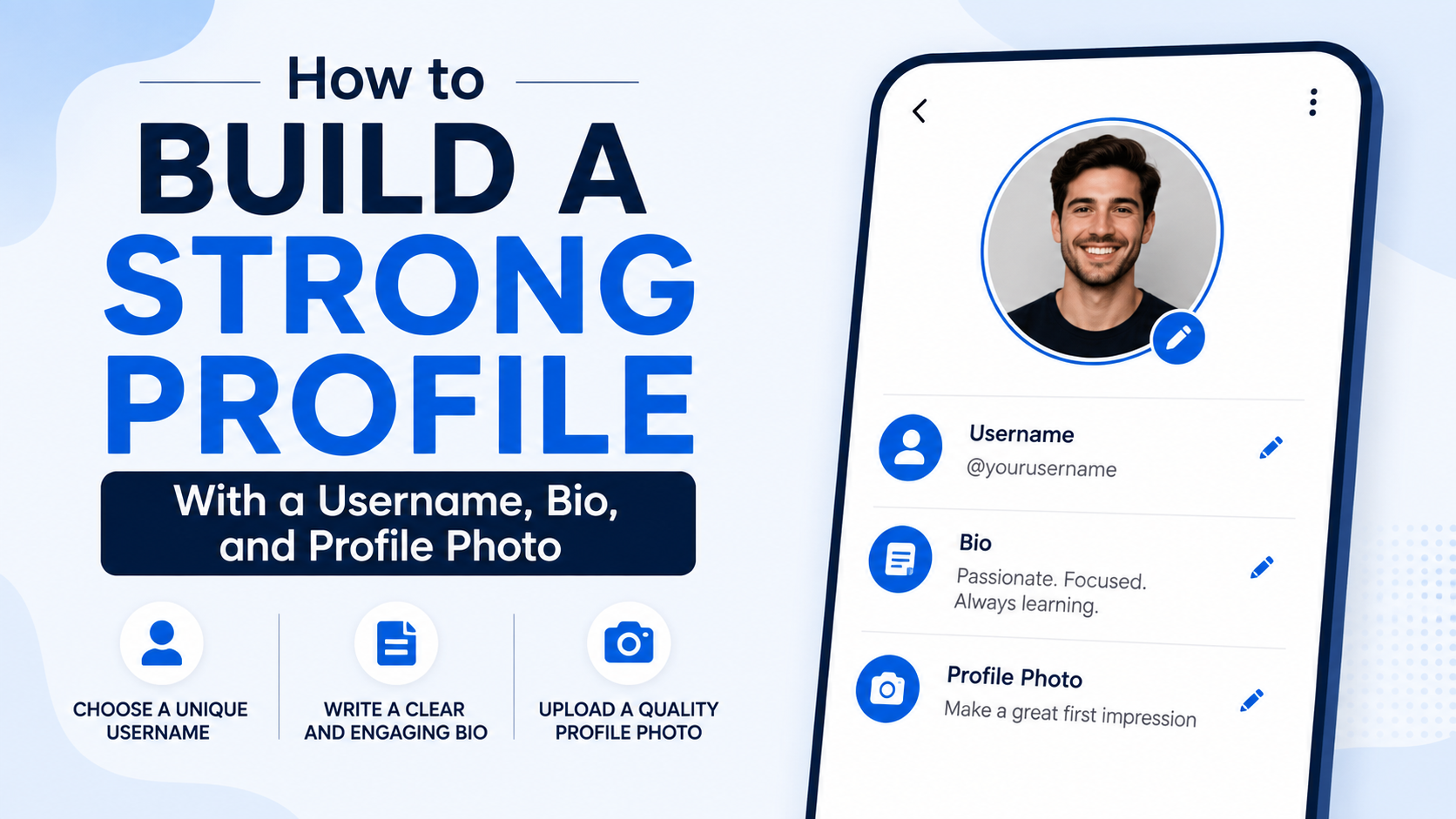
How to Build a Strong Profile With a Username, Bio, and Profile Photo
On this page
- Why Your Profile Basics Matter
- Choose a Username That Supports Your Goals
- Write a Bio That Explains Your Value
- Select a Profile Photo That Builds Trust
- Make Your Profile Feel Cohesive
- Adapt Your Profile for Different Platforms
- Common Profile Mistakes to Avoid
- Audit and Improve Your Profile Regularly
- Frequently Asked Questions
- Conclusion
How to Build a Strong Profile With a Username, Bio, and Profile Photo
Your profile is often your first introduction to a potential client, employer, collaborator, customer, or new connection. Before someone reads your posts, portfolio, or résumé, they usually see three small but influential elements: your username, bio, and profile photo.
Together, these details shape how recognizable, trustworthy, and approachable you appear. A strong profile does not need to be flashy or overly polished. It needs to be clear, consistent, and aligned with the impression you want to create.
Key Takeaways
- Choose a username that is easy to spell, remember, and use consistently across platforms.
- Write a bio that quickly explains who you are, what you do, and why people should follow or contact you.
- Use a current, high-quality profile photo that matches the platform and your professional goals.
- Keep your username, bio, and profile photo consistent with your personal or business brand.
- Review your profile regularly as your role, goals, and expertise evolve.
Why Your Profile Basics Matter
A username, bio, and profile photo may seem like minor details, but they influence whether people recognize you, trust you, and take the next step.
On professional platforms, your profile can affect networking opportunities, job searches, speaking invitations, and sales conversations. On social platforms, it can determine whether someone follows you or scrolls past. For a business, these elements establish legitimacy before a visitor ever reaches a website.
First Impressions Happen Quickly
People make fast judgments online. An unclear username, vague bio, or low-quality image can create uncertainty, even if your work is excellent.
A profile should answer basic questions at a glance:
- Who is this person or business?
- What do they do?
- Is this account authentic and relevant?
- Why should I connect, follow, or learn more?
For example, a freelance designer with the username @alexdesigns, a bio describing their specialty, and a clean headshot will be easier to trust than an account named @xXcreative_349 with no description and an outdated photo.
Consistency Builds Recognition
Using the same visual and verbal identity across LinkedIn, Instagram, X, TikTok, email, portfolios, and community platforms makes you easier to find and remember.
This does not mean every profile must be identical. Your tone can adapt to the audience. However, your core identity should remain consistent: the same name or handle, a similar photo, and a clear description of your work.
Choose a Username That Supports Your Goals
Your username is your digital address. It should help people locate you, mention you, and remember you without confusion.
Prioritize Clarity Over Cleverness
A creative username can be memorable, but not if people cannot spell or search for it. In most cases, your real name, business name, or a simple variation is the strongest option.
Good username formats include:
@janedoe@janedoeconsulting@doephotography@thecareercoach@northstarstudio
Avoid unnecessary numbers, repeated punctuation, difficult abbreviations, or inside jokes unless they are central to an established brand.
For instance, @mariawrites is clearer than @mari4writes92. The first is easier to say aloud, type, and recommend to someone else.
Keep It Consistent Across Platforms
Before settling on a username, check whether a similar version is available on the platforms that matter to you. Complete uniformity is ideal, but a close match is still effective.
If your preferred username is unavailable, use a logical variation:
- Add your profession:
@samleephoto - Add your location only if useful:
@samlee.nyc - Add your company name:
@samleecreative - Use an underscore sparingly:
@sam_lee
Try not to create unrelated usernames for different channels. When someone sees @maya.chen on LinkedIn and @mayamakesstuff elsewhere, they may not realize both accounts belong to the same person.
Think About Searchability
Your username should include words people may use to find you when appropriate. This is especially useful for businesses and service providers.
A local bakery named “Sunrise Bakes” might use @sunrisebakes, while a wedding photographer may choose @oliviabrooksphoto. These names support both brand recognition and relevant searches.
Write a Bio That Explains Your Value
A strong bio is short, specific, and useful. It is not a complete life story; it is an invitation to learn more or take action.
Use a Simple Bio Framework
A reliable structure is:
Who you are + what you do + who you help or the result you create + next step
For example:
Product marketer helping SaaS teams turn complex features into clear customer value. Sharing practical growth insights. Contact: hello@brandname.com
This tells visitors the person’s role, area of expertise, audience, and how to connect.
For a personal account, the format can be more relaxed:
Book lover, weekend hiker, and communications professional. Finding good stories in everyday places.
The right level of formality depends on the platform, but clarity still matters.
Include Relevant Keywords Naturally
Use terms your ideal audience may search for, especially on LinkedIn, professional directories, portfolio sites, and business profiles.
A vague bio such as “Helping brands grow” does not say much. A more useful version might be:
Content strategist helping B2B software companies improve SEO, thought leadership, and customer education.
Relevant keywords here include “content strategist,” “B2B software,” “SEO,” and “thought leadership.” They explain the person’s expertise without sounding forced.
Add Proof or Personality
Once the essentials are clear, add a detail that makes your profile more human or credible. This could include:
- A certification or achievement
- A niche specialty
- A recognizable client category
- A personal interest related to your brand
- A concise mission statement
For example:
Certified financial planner helping young families build practical money habits. Coffee-powered spreadsheet enthusiast.
The first sentence builds authority; the second adds warmth.
Select a Profile Photo That Builds Trust
Your profile photo should make you easy to recognize and appropriate for the platform. You do not need a formal studio portrait, but you should look clear, current, and intentional.
Use a Recent, High-Quality Image
A good profile photo is well-lit, in focus, and cropped so your face is visible even at a small size. A photo from the last one to three years is usually a good benchmark, assuming it still reflects your appearance.
Aim for:
- Natural or soft lighting
- A clear view of your face
- A simple, non-distracting background
- A comfortable, genuine expression
- Clothing appropriate for your audience or industry
Avoid heavily filtered photos, group pictures, sunglasses, distant shots, or images where people have to guess which person is you.
Match the Platform and Your Brand
A corporate executive, freelance illustrator, restaurant owner, and gaming creator can all use effective profile photos, but the style may differ.
A professional services profile may benefit from a polished headshot. A creative professional might use a more expressive portrait with a subtle visual signature. A company account should generally use a crisp, recognizable logo rather than an employee photo.
The key question is: does the image match the level of trust and personality your audience expects?
Make the Image Accessible
Use an accurate descriptive name or alt text where the platform allows it. For example:
Portrait of Jordan Ellis, sustainability consultant, wearing a navy jacket against a light background.
This improves accessibility and helps maintain professional standards across your digital presence.
Make Your Profile Feel Cohesive
A username, bio, and profile photo are most effective when they work together. Each element should reinforce the same message.
Align Your Visual and Written Identity
Imagine a career coach with a warm headshot, the username @careerwithnia, and a bio that reads:
Helping mid-career professionals find work that fits. Practical job-search strategy, confidence, and clarity.
Every part supports the same promise. The profile is approachable, focused, and easy to understand.
In contrast, a formal username paired with a meme image and a bio full of unrelated slogans can make an account feel unfinished or confusing.
Use a Clear Call to Action
If you want visitors to do something, tell them what that is. A call to action can be simple:
- “View my portfolio below.”
- “Subscribe to the newsletter.”
- “Book a consultation.”
- “Message me for speaking inquiries.”
- “Follow for weekly career tips.”
Do not overload a short bio with several competing links and requests. Choose the action that best supports your current goal.
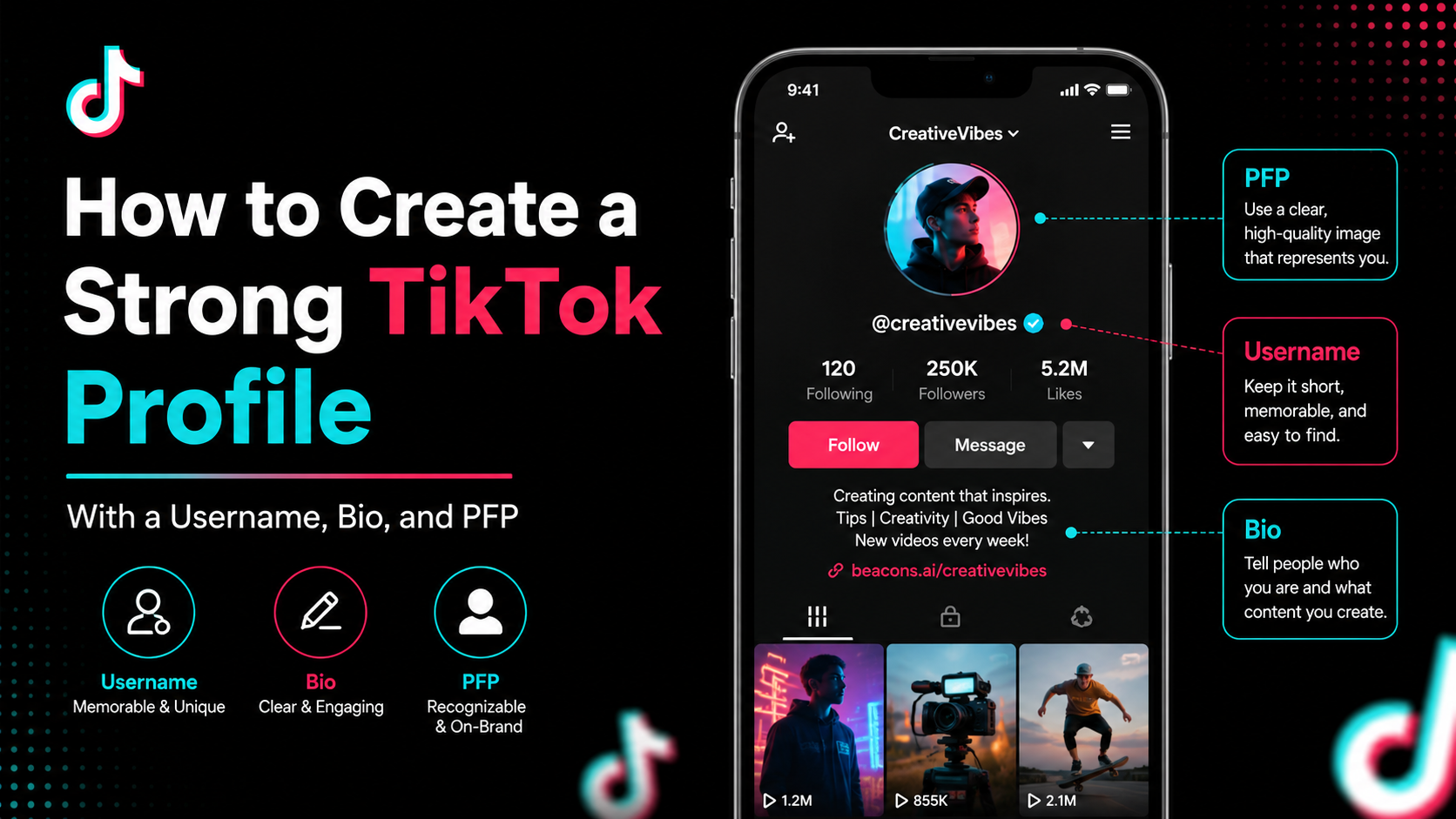

Adapt Your Profile for Different Platforms
You can preserve a consistent identity while adjusting your profile for the culture and purpose of each platform.
Professional Networks
On LinkedIn and industry communities, emphasize your role, specialty, outcomes, and professional credibility. Use a clear headshot and include keywords relevant to your field.
Example:
UX researcher | Turning customer insight into better digital products | Accessibility advocate
Social and Creative Platforms
On Instagram, TikTok, YouTube, or similar channels, your bio can be more conversational. Lead with the content people can expect and your unique angle.
Example:
Simple home cooking for busy weeknights. New recipes every Tuesday. 🍲
This is direct, audience-focused, and easy to understand.
Business Profiles
For a business account, make the company name, category, location or service area, and contact route obvious.
Example:
Independent bookstore in Portland, OR. New releases, local authors, and thoughtful gifts. Visit us downtown.
Common Profile Mistakes to Avoid
Small mistakes can weaken an otherwise strong online presence. Fortunately, most are easy to correct.
Being Too Vague
Bios such as “Living life,” “Entrepreneur,” or “Here for good vibes” may communicate personality, but they do not help a new visitor understand your account.
Replace broad labels with a specific focus. Rather than “Entrepreneur,” try “Founder helping small retailers launch sustainable packaging.”
Overloading the Bio
A bio packed with emojis, hashtags, job titles, links, and unrelated claims can be hard to scan. Keep the most important information first and remove anything that does not support your purpose.
Using an Unprofessional or Outdated Photo
An old image, blurry selfie, or cropped group photo can reduce confidence. Update your photo when your appearance changes significantly or when your current image no longer reflects your goals.
Audit and Improve Your Profile Regularly
Your profile should evolve as your career, business, and priorities change. Reviewing it every few months helps keep it relevant.
Run a Quick Profile Check
Ask yourself:
- Is my username easy to find and consistent elsewhere?
- Does my bio clearly explain what I do?
- Does my photo still look like me?
- Is my main link or contact information current?
- Does the profile reflect the audience I want to reach now?
You can also ask a trusted colleague to look at your profile for five seconds and describe what they think you do. If their answer is unclear or inaccurate, revise your bio.
Test the Profile From a Visitor’s Perspective
View your profile on a mobile device, where most people may encounter it. Check whether the image is recognizable, the first line of the bio communicates your value, and any link works properly.
Small updates can have a meaningful effect. Replacing a generic bio with a specific one, for example, can help the right people immediately understand why they should connect.
Frequently Asked Questions
How long should a profile bio be?
Use the available space, but prioritize clarity over length. In one or two sentences, explain who you are, what you do, and what visitors can expect. If you have more room, add credibility, personality, or a call to action.
Should I use my real name as my username?
Usually, yes—especially for professional networking, job seeking, consulting, or personal branding. If your name is common, add a relevant professional or business term, such as @alexkimdesign or @rachelmorganlaw.
Is a logo better than a profile photo for a business?
For a company account, a logo is usually best because it creates consistent brand recognition. For a founder-led business or personal service brand, a professional photo may build stronger personal trust. Many businesses use a logo for the official account and a headshot for the founder’s personal profile.
Can I use the same bio on every platform?
You can reuse the core message, but tailor the wording to each platform’s audience and character limit. Keep your role, expertise, and brand voice consistent while changing the emphasis where needed.
How often should I update my profile photo?
Update it whenever it no longer represents your current appearance or professional identity. For most people, reviewing it every one to three years is sufficient. Businesses should update logos only when their visual branding changes.
Conclusion
A compelling username, bio, and profile photo create the foundation of a strong online presence. Make your username easy to remember, write a bio that clearly communicates your value, and choose a photo that feels current, professional, and authentic.
Treat these details as part of your personal or business brand—not an afterthought. Review your profile today, make one meaningful improvement, and give every new visitor a clearer reason to trust, follow, or contact you.
Advertisement