August 19, 2026 · Updated August 23, 2026 · 12 min read
What Is a Profile Photo in Modeling and How Should It Look?
On this page
- What Is a Profile Photo in Modeling?
- Why a Strong Profile Photo Matters for Models
- How a Modeling Profile Photo Should Look
- Choosing Hair, Makeup, Wardrobe, and Expression
- Preparing for the Photo Session
- Common Profile Photo Modeling Mistakes to Avoid
- Tailoring Your Profile Photo to Different Modeling Niches
- A Final Checklist Before You Upload
- Frequently Asked Questions
- Conclusion
What Is a Profile Photo in Modeling and How Should It Look?
In modeling, a profile photo is often the first image a casting director, agency, brand, or photographer sees. Before someone reviews your portfolio, checks your measurements, or reads your experience, they may decide whether to click based on one small image.
That makes a strong profile photo modeling strategy more important than many new models realize. The goal is not to look overly edited, glamorous, or unrecognizable. Instead, your profile photo should show a clear, current, professional version of you—one that communicates confidence, versatility, and suitability for the work you want to book.
Key Takeaways
- Use a recent, sharply focused image that clearly shows your face.
- Keep styling simple so casting teams can assess your natural features quickly.
- Choose soft, even lighting and a clean, uncluttered background.
- Match the photo’s mood and presentation to the modeling work you pursue.
- Avoid heavy filters, extreme retouching, and outdated images.
- Update your profile photo whenever your hair, appearance, or branding changes significantly.
What Is a Profile Photo in Modeling?
A modeling profile photo is the main image attached to a model’s online portfolio, agency listing, casting profile, or professional social media account. It usually focuses on the model’s face and shoulders, although some platforms allow a slightly wider portrait.
Unlike a fashion editorial image, the profile photo is primarily functional. It helps industry professionals identify you, evaluate your look, and decide whether you may fit a specific campaign, runway show, commercial, or creative project.
Its Purpose Is Identification and First Impression
Casting teams often review dozens—or hundreds—of applications quickly. Your profile photo should make their job easier by answering basic questions immediately:
- What do you look like right now?
- Are your facial features visible?
- Does your presentation suit the project?
- Does your profile appear professional and trustworthy?
For example, a skincare brand casting real-looking talent may prefer a natural, well-lit headshot with minimal makeup. A high-fashion agency may accept a more stylized image, but it should still accurately represent your current appearance.
It Is Not the Same as a Portfolio Image
A portfolio image is designed to demonstrate range, posing ability, movement, styling, or storytelling. A profile photo is more like your professional visual introduction.
A strong portfolio can include dramatic lighting, bold wardrobe, creative makeup, and artistic concepts. Your profile image should be simpler. If someone cannot recognize you when you arrive at a casting, the image has failed its main purpose.
Why a Strong Profile Photo Matters for Models
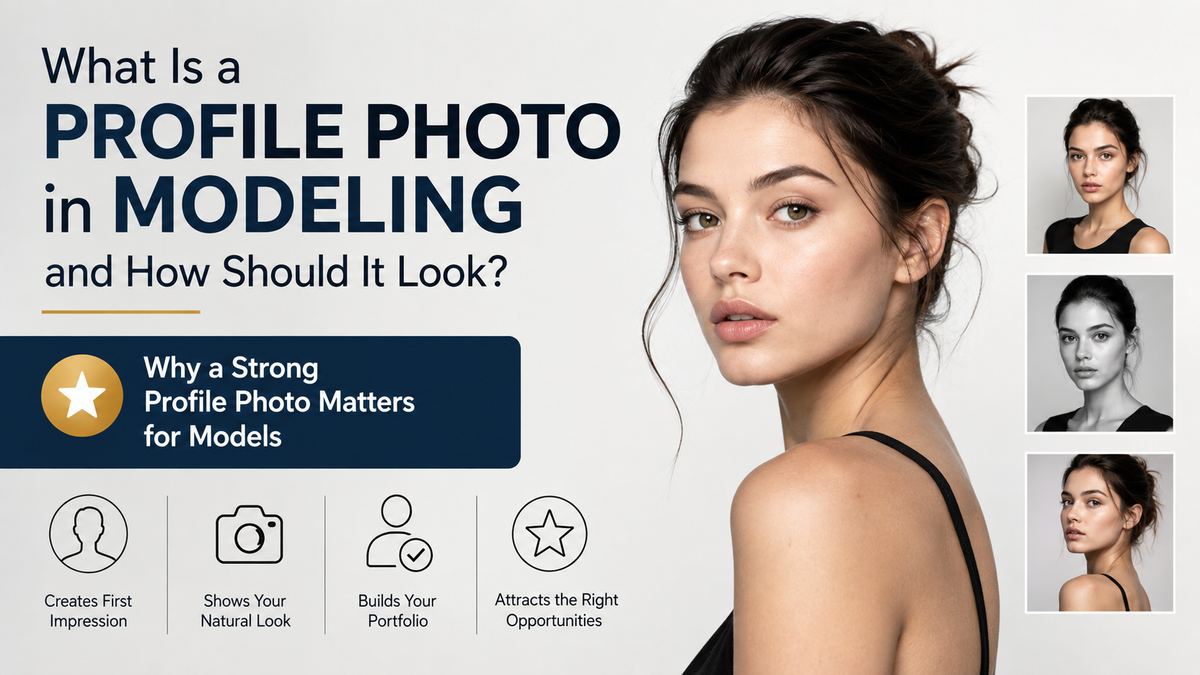
A profile photo can influence whether industry professionals explore the rest of your work. It sets expectations about your professionalism, reliability, and personal brand.
It Builds Trust Before You Meet Anyone
A clean, accurate photo signals that you understand how the industry works. It tells a casting director that you are prepared, current, and comfortable presenting yourself professionally.
A blurry selfie taken in a dim room can create the opposite impression, even if you have the right look for the role. The issue is not that the image was taken on a phone; modern phone cameras are often excellent. The issue is whether the result looks intentional.
It Helps You Get Matched to the Right Jobs
Casting professionals need to assess fit quickly. Your photo should help them see where you may belong, whether that is:
- Commercial and lifestyle modeling
- Beauty and skincare campaigns
- E-commerce and catalog work
- Fitness modeling
- Runway and fashion modeling
- Acting, extras, or promotional work
- Creator and influencer partnerships
For instance, a commercial model may benefit from a warm, approachable expression. A runway-focused profile can be more neutral and editorial. Neither approach is universally better; the right choice depends on the audience and assignment.
How a Modeling Profile Photo Should Look
The best profile photo modeling image is clear, flattering, current, and believable. It should look polished without appearing artificial.
Prioritize a Clear View of Your Face
Your face should be the focus. Ideally, use a head-and-shoulders image or a portrait cropped from mid-chest upward. Your eyes should be visible, and your face should not be blocked by sunglasses, hair, hands, hats, or strong shadows.
Aim for:
- A sharp, high-resolution image
- Eye-level or slightly above-eye-level framing
- A direct or gently angled pose
- Enough space around your head to avoid a cramped crop
- Natural proportions without wide-angle distortion
Avoid using a full-body image as your primary profile photo unless the platform specifically recommends it. A small thumbnail makes it difficult to evaluate details from a distance.
Use Soft, Even Lighting
Lighting can make a simple photo look professional. Natural window light is often an excellent option because it creates soft shadows and helps reveal skin tone accurately.
Stand facing a large window, rather than placing the window directly behind you. If outdoors, look for open shade—such as under a covered area or near a building—to avoid harsh midday shadows.
Try to avoid:
- Bright overhead lighting
- Strong backlighting
- Colored club or event lighting
- Flash that creates red-eye or shiny skin
- Heavy contrast that hides facial details
A beauty brand, for example, needs to see your skin texture and complexion. Soft lighting provides a more useful representation than dramatic shadows.
Keep the Background Simple
The background should support the photo, not compete with it. Plain walls, seamless backdrops, clean studio settings, or uncluttered outdoor locations work well.
Neutral colors such as white, gray, beige, soft blue, or muted earth tones are reliable choices. A busy restaurant, bedroom, car interior, or crowded event usually distracts from your face and can make the image feel casual.
Choosing Hair, Makeup, Wardrobe, and Expression
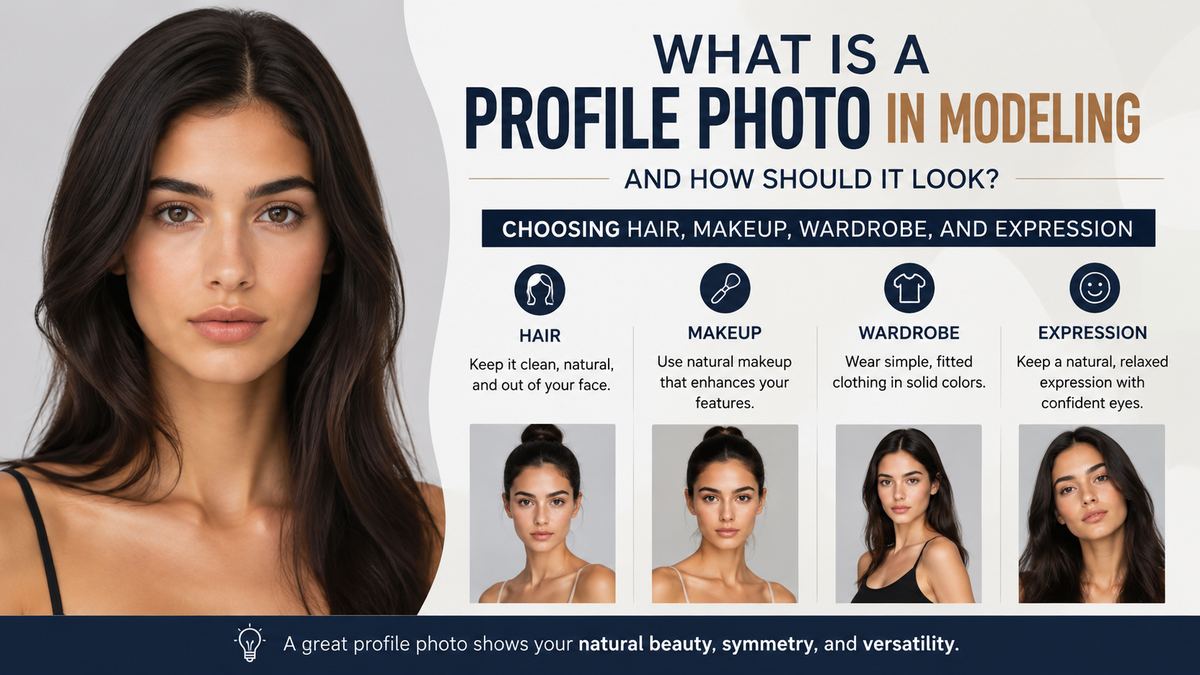
Your styling should enhance your features while still allowing clients to see the real you.
Wear Simple, Well-Fitting Clothing
Choose clothing that looks clean, current, and flattering. Solid colors typically work better than large logos, bold graphics, or busy patterns. A simple fitted T-shirt, tank top, blouse, button-down shirt, or blazer can all work depending on your niche.
Consider your target market:
- Commercial models can use approachable, polished everyday styling.
- Fashion models may choose a minimal black or neutral top.
- Fitness models may wear clean activewear if appropriate.
- Beauty models should keep the neckline and styling simple so the face remains central.
Your clothing should not overpower the image. The viewer should notice you first, then your styling.
Use Natural Makeup and Grooming
For most general modeling profiles, natural makeup is safest. It should even out your complexion and define your features without changing how you look.
Good choices include:
- Light complexion coverage, if desired
- Groomed brows
- Subtle mascara
- Neutral lip color
- Natural-looking hair with minimal flyaways
Heavy contouring, false lashes, dramatic eye makeup, or intense filters can make a profile photo less useful for casting. If you model beauty or editorial work, you may include more polished images elsewhere in your portfolio.
Choose an Expression That Fits Your Brand
A relaxed smile can make you seem approachable and works well for commercial, lifestyle, hospitality, and family-focused campaigns. A neutral expression can feel stronger for fashion, beauty, and editorial categories.
When unsure, take several options:
- One warm smile
- One soft, relaxed expression
- One neutral, confident expression
You can then select the photo that best aligns with the platform or type of job you are pursuing.
Preparing for the Photo Session
You do not necessarily need an expensive studio session, especially when you are starting. However, preparation matters.
Plan the Basics Before Shooting
Set yourself up for a better result by preparing in advance:
- Get enough sleep and hydrate the day before.
- Choose your outfit and test it on camera.
- Clean your camera lens.
- Use a tripod or ask a reliable person to photograph you.
- Take images near a window or in open shade.
- Capture several poses, angles, and expressions.
If you use a phone, use the rear camera when possible. It generally produces better image quality than the front-facing camera. Keep the camera level with your eyes and avoid using ultra-wide lenses, which can distort facial proportions.
Take More Than One Version
A single profile photo may not suit every platform. You might maintain separate—but consistent—versions for different needs.
For example, your agency profile could feature a neutral headshot, while your LinkedIn profile uses a slightly more formal portrait. Your casting-platform image may feature a friendly smile for commercial roles.
The core principle remains the same: every version should be recent and accurately represent you.

Common Profile Photo Modeling Mistakes to Avoid
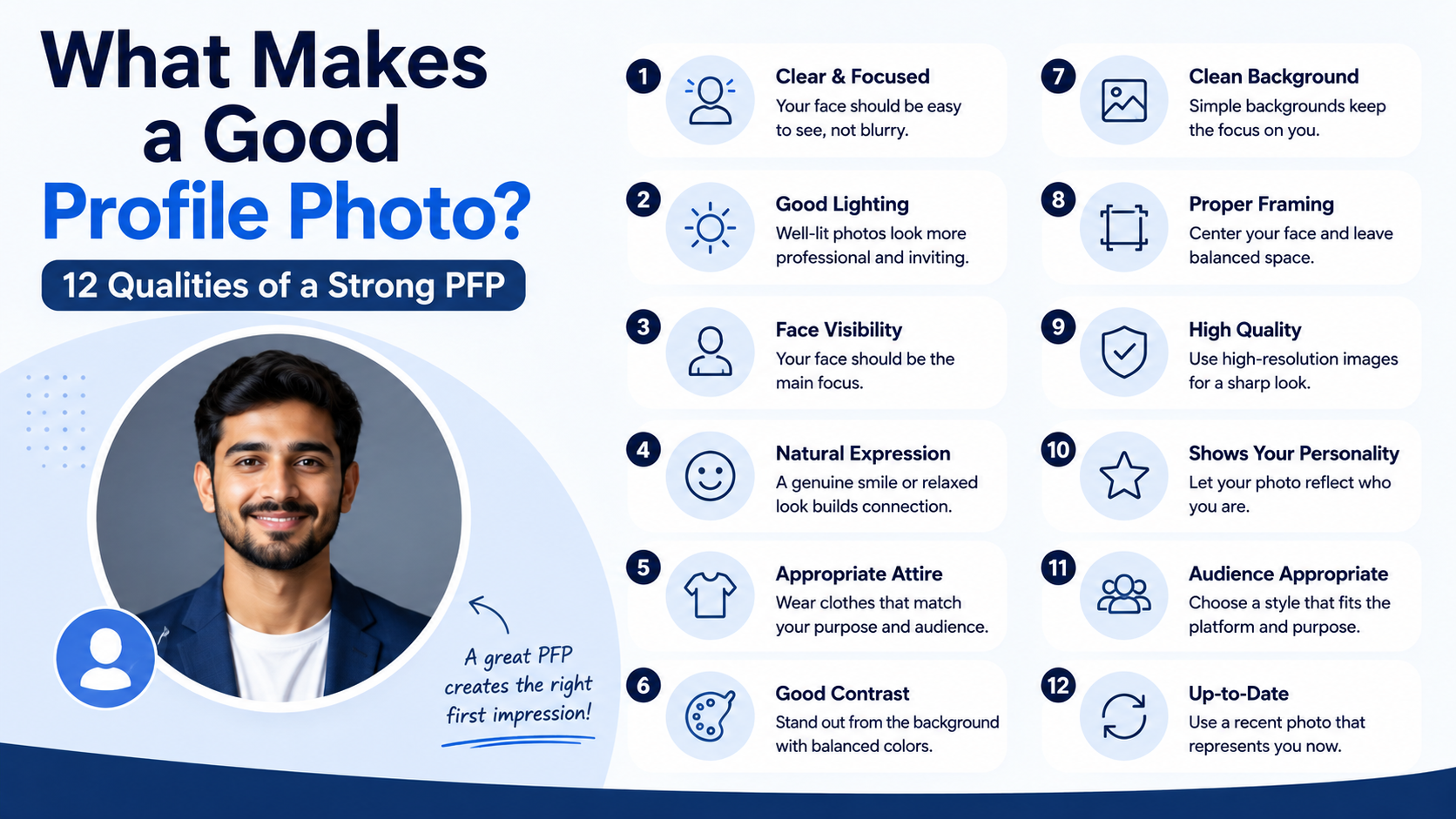
Even talented models can lose opportunities because their profile image creates confusion or appears unprofessional.
Overediting and Filters
Retouching should be subtle. Removing a temporary blemish may be acceptable, but changing your face shape, skin tone, eye color, body proportions, or defining features can damage trust.
Casting teams expect to meet the person in the photograph. If your appearance differs substantially in person, it may affect future bookings.
Avoid:
- Beauty filters
- Face-smoothing apps
- Artificially enlarged eyes or lips
- Extreme whitening effects
- Changing your natural skin tone
- AI-generated portraits that do not accurately represent you
Outdated Images
A profile image from several years ago can be misleading if your hair, facial hair, weight, style, or overall appearance has changed. Update your photo after major changes, including a dramatic haircut, a new hair color, or a significant change in your look.
A current phone portrait is usually more valuable than an outdated professional headshot.
Poor Cropping and Visual Clutter
Do not use a group photo and crop other people out. Avoid photos where another person’s shoulder, hand, or hair remains visible. Also skip images with distracting backgrounds, awkward angles, or low resolution.
Your profile photo should look deliberate from the moment someone sees it.
Tailoring Your Profile Photo to Different Modeling Niches
One universal image can work well, but tailoring your photo to your market can make it more effective.
Commercial and Lifestyle Modeling
Commercial modeling clients often look for warmth, relatability, and natural energy. A genuine smile, soft daylight, and approachable styling are strong choices.
Think of campaigns for banks, grocery brands, travel companies, healthcare providers, or family products. These clients typically want people who look authentic and comfortable.
Fashion, Runway, and Editorial Modeling
Fashion-focused profiles can be more understated and striking. A clean background, neutral expression, simple wardrobe, and minimal makeup allow your bone structure and proportions to stand out.
A black tank top against a plain wall, photographed in soft light, can be more effective than an elaborate outfit that hides your natural silhouette.
Beauty and Skincare Modeling
Beauty work requires clear, close-up visibility of your face. Use excellent lighting, avoid heavy filters, and make sure your skin is represented honestly.
Keep jewelry and accessories limited. The point is to highlight facial structure, complexion, lips, eyes, and hair—not compete with them.
A Final Checklist Before You Upload
Before making an image your main profile photo, review it carefully.
Ask These Questions
- Is the photo recent?
- Can someone clearly see my face and eyes?
- Is the image sharp and well lit?
- Does it reflect how I look in person?
- Is the background clean and unobtrusive?
- Does my outfit support, rather than distract from, my appearance?
- Does the expression suit the work I want to book?
- Would I feel confident meeting a casting director looking exactly like this?
If the answer to any of these questions is no, take another round of photos. Small improvements can make a meaningful difference.
Frequently Asked Questions
Do models need professional headshots for their profile photos?
Not always. A professionally shot image can be valuable, but a well-lit, sharply focused phone portrait can work very well. What matters most is that the photo is current, clear, natural, and appropriate for the type of modeling you pursue.
Should I smile in my modeling profile photo?
It depends on your niche. Smiling is highly effective for commercial and lifestyle modeling because it feels inviting and relatable. Fashion and editorial models often use a neutral expression. If possible, keep both options available.
Can I use a selfie as a modeling profile photo?
You can, but it should not look like a casual selfie. Use good lighting, a clean background, a stable camera position, and a natural angle. Avoid mirror selfies, bathroom shots, car selfies, and filtered social-media images.
How often should I update my profile photo?
Update it whenever your appearance changes noticeably or when the current image no longer represents you accurately. As a general guideline, review your profile photo every six to twelve months.
Should I retouch my profile photo?
Light retouching is acceptable when it preserves your real appearance. Avoid edits that reshape features, erase natural texture, or make you difficult to recognize in person. Accuracy matters more than perfection in profile photo modeling.
Conclusion
A successful modeling profile photo is clear, current, natural, and aligned with the work you want to attract. It does not need excessive styling or expensive production; it needs to help casting professionals see you quickly and accurately.
Review your current image with a critical eye, use clean lighting and simple styling, and upload a portrait that reflects the model clients will meet in person. A strong profile photo can open the door to more profile views, better casting matches, and stronger first impressions.