August 19, 2026 · 12 min read
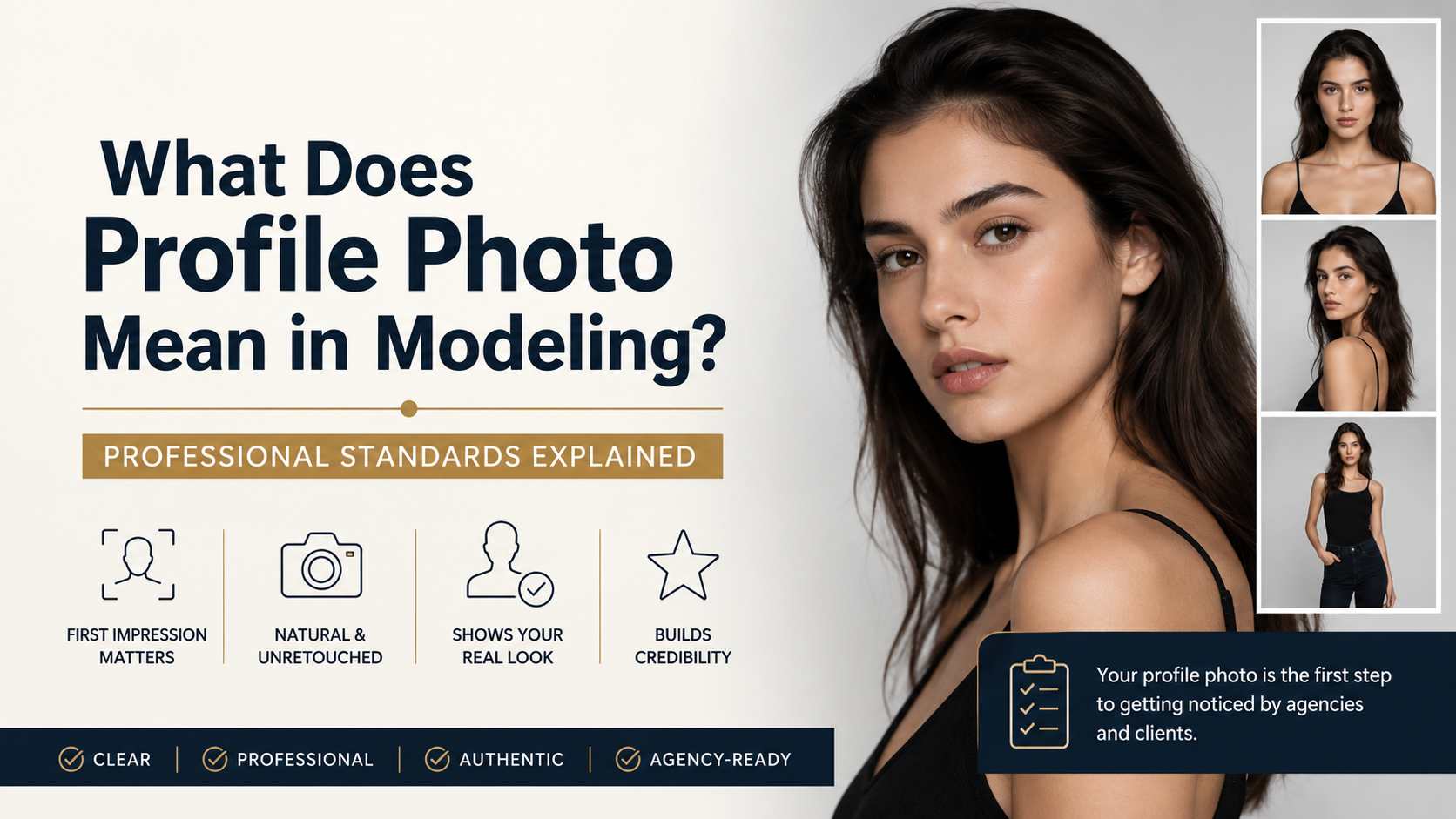
What Does Profile Photo Mean in Modeling? Professional Standards Explained
On this page
- What Is a Profile Photo in Modeling?
- Why Agencies and Clients Request Profile Photos
- Professional Standards for a Modeling Profile Photo
- How to Pose for a Modeling Profile Photo
- Profile Photos for Different Types of Modeling
- Common Profile-Photo Mistakes to Avoid
- How to Create a Strong Modeling Profile Photo at Home
- Frequently Asked Questions
- Conclusion
What Does Profile Photo Mean in Modeling? Professional Standards Explained
A profile photo in modeling is more than a flattering picture of your face. It is a practical industry tool used by agencies, casting directors, photographers, and clients to assess how a model looks from the side, how their features photograph, and whether they suit a specific brief.
For aspiring models, understanding this requirement can prevent a common mistake: submitting overly edited, posed, or casual images when professionals need a clear, honest representation. For working models, a strong profile image helps keep a portfolio current, credible, and ready for castings.
Key Takeaways
- A profile photo in modeling usually shows the model’s face and body from a side-facing angle.
- Agencies use it to evaluate facial structure, posture, proportions, and overall suitability for a role.
- Natural lighting, minimal retouching, and simple styling are usually the professional standard.
- A modeling profile photo should look current and accurately reflect your present appearance.
- Different modeling categories may require different profile-photo approaches.
- Updating your images after major changes to your hair, body, or look is essential.
What Is a Profile Photo in Modeling?
A profile photo in modeling is an image taken from the side, typically showing one side of a model’s face. Depending on the agency or casting request, it may be a close-up headshot, a mid-length image, or a full-body side view.
The goal is not to create a dramatic social-media portrait. Instead, the image provides a clear visual record of the model’s natural features and proportions.
Profile Photo vs. Profile Picture
Outside the fashion industry, “profile photo” often means the image used on a social-media account, business platform, or messaging app. In modeling, the phrase is more specific.
A modeling profile photo is commonly part of a set of digitals, also called polaroids or snapshots. These straightforward images help decision-makers see the model without heavy makeup, styling, filters, or professional retouching.
A standard set may include:
- Front-facing headshot
- Left-side facial profile
- Right-side facial profile
- Three-quarter facial angle
- Full-body front view
- Full-body side view
- Full-body back view
Why the Side View Matters
A front-facing image cannot show every feature that affects how a person photographs or fits a creative brief. A side profile reveals details such as:
- Nose shape and facial balance
- Jawline and chin definition
- Forehead and cheekbone structure
- Neck length and posture
- Hairline and hairstyle shape
- How the model’s face reads in motion or from multiple camera angles
For example, a beauty campaign may need a model with a distinct jawline and balanced facial proportions, while an editorial shoot may seek an unusual or striking silhouette. The profile photo gives casting professionals information that a single headshot cannot.
Why Agencies and Clients Request Profile Photos
Modeling is a visual profession, but it is also a fast-moving business. Agencies and clients need reliable images that allow them to make informed decisions quickly.
Accurate Casting Decisions
A profile photo helps casting teams match models to a project’s visual requirements. If a brand needs a clean side view for a jewelry campaign, a sunglasses advertisement, or a hair commercial, the team needs to know how the model looks from that angle before scheduling a test shoot.
This is especially important when a campaign includes close-up photography or video. A model may look excellent in a frontal portrait but have a different visual impact in profile.
Consistent Agency Records
Agencies maintain model boards, portfolios, and internal databases. Current digitals make it easier for bookers to submit the right talent for client opportunities.
A clear profile photo can help an agency answer questions such as:
- Does the model’s current haircut match their portfolio?
- Has their appearance changed since the last update?
- Is their posture appropriate for a runway or commercial role?
- Can they fit a client’s requested look without extensive styling?
Reducing Surprises on Set
Clients want confidence that the person they book will resemble the images they reviewed. Accurate photos reduce mismatches between submissions and real-life appearance.
This matters for everyone involved. A model avoids awkward expectations, an agency protects its reputation, and a client can plan styling, lighting, wardrobe, and shot lists more efficiently.
Professional Standards for a Modeling Profile Photo
Professional standards differ slightly by market and modeling category, but several principles apply almost everywhere: clarity, accuracy, simplicity, and recency.
Use Natural, Honest Presentation
Your profile photo should represent how you genuinely look now. Avoid filters, face-altering apps, aggressive skin smoothing, or edits that change your facial shape.
Small corrections, such as removing a temporary blemish or adjusting exposure, may be acceptable in a polished portfolio image. However, agency digitals are generally expected to be minimally edited or completely unretouched.
Use:
- Natural skin texture
- Realistic hair color and length
- Current body shape
- Minimal or natural-looking makeup
- Your usual glasses only if requested or relevant
Avoid:
- Beauty filters
- Heavy contouring
- False lashes that obscure the eye shape
- Dramatic colored lighting
- Retouching that changes your nose, jaw, lips, or body
Choose Plain, Neutral Styling
Simple styling keeps attention on the model rather than the outfit or background. A fitted black, white, gray, or neutral top is often ideal for a head-and-shoulders profile image.
For full-body digitals, agencies commonly recommend fitted basics such as a plain tank top, T-shirt, jeans, leggings, shorts, or simple swimwear where appropriate.
The clothing should show your shape without distracting patterns, logos, oversized layers, or elaborate accessories.
Prioritize Good Lighting
Soft natural daylight is usually the best option. Stand near a large window or photograph outside in open shade, where the light is bright but not harsh.
Avoid direct overhead sunlight, which can create unflattering shadows under the eyes and nose. Also avoid dim indoor rooms, colored LED lights, and flash-heavy photography unless a professional specifically directs otherwise.
A simple setup can work well:
- Face a window or stand slightly sideways near it
- Use a plain white, gray, or uncluttered wall
- Hold the camera at eye level
- Keep the image sharp and evenly exposed
How to Pose for a Modeling Profile Photo
A strong profile photo should look relaxed, balanced, and intentional. You do not need an exaggerated fashion pose, but posture matters.
Position Your Face Correctly
Turn your head approximately 90 degrees to one side so the camera sees a clean side view. Keep your eyes looking straight ahead rather than toward the lens.
Maintain a neutral expression unless the agency requests a smiling version. Relax your mouth, forehead, and shoulders. Avoid pushing your chin forward too far or pulling it tightly inward.
A useful guideline is to imagine a string gently lifting the top of your head. This helps lengthen your neck and improve posture without looking stiff.
Keep Your Body Aligned
For a headshot, your shoulders can remain slightly angled while your face turns to the side. For a full-body profile image, turn your entire body sideways and distribute your weight naturally.
Check these details before taking the photo:
- Shoulders are down and relaxed
- Back is straight but not rigid
- Chin is level
- Arms are placed naturally
- Hair is not covering important facial features
- Clothing is smooth and fitted
Take Both Sides When Possible
Many agencies prefer both left and right profiles because facial features are not always perfectly symmetrical. Providing both sides also gives casting teams more flexibility.
For example, a photographer planning a beauty shoot may find that one side catches the light more effectively. A complete set of profile images makes that decision easier.
Profile Photos for Different Types of Modeling
The basic standard stays consistent, but the details can change depending on the modeling field.
Fashion and Editorial Modeling
Fashion agencies usually prioritize clean, natural digitals. Models are often asked to wear little or no makeup, pull hair away from the face, and use a plain background.
Editorial clients may appreciate distinctive features, unconventional proportions, or strong bone structure. Do not try to “correct” these traits through angles or editing. Individuality can be an advantage.
Commercial Modeling
Commercial modeling often calls for approachable, relatable energy. A neutral profile image may still be required, but agencies may also request smiling images to show warmth and personality.
A commercial model submitting for a family-healthcare campaign, for instance, may need a polished yet natural look that feels trustworthy and accessible.
Beauty, Hair, and Skincare Modeling
Beauty clients closely examine skin, facial symmetry, hairline, neck, and profile shape. High-resolution images with clean lighting are especially important.
For hair modeling, show your current cut, color, texture, and length honestly. If your hair has been recently cut, colored, or chemically treated, update your photos before submitting to agencies.
Fitness and Lifestyle Modeling
Fitness modeling often requires full-body side images as well as facial profiles. These photographs help demonstrate posture, physique, muscle definition, and proportions.
The objective is still accuracy. Avoid flexing excessively or using angles that create an unrealistic impression of your body unless the casting brief specifically requests athletic poses.
Common Profile-Photo Mistakes to Avoid
The biggest mistake is treating a modeling profile photo like an influencer portrait. Professional decision-makers are looking for useful visual information, not a highly stylized image.
Overediting and Filters
A filtered image can undermine trust immediately. If your submission looks substantially different in person, agencies may hesitate to represent or rebook you.
Keep your skin, facial structure, and proportions real. A good profile photo should make a casting director feel confident, not uncertain.
Outdated Images
Photos become outdated faster than many people realize. Update your profile images after significant changes, including:
- A new haircut or major color change
- Weight or body-composition changes
- New facial hair
- Braces or dental changes
- Visible tattoos or piercings
- Major skincare changes
- Cosmetic procedures
A current image is more valuable than a beautiful image that no longer represents you.
Poor Backgrounds and Busy Styling
Messy bedrooms, crowded bathrooms, parked cars, and heavily decorated walls distract from the subject. So do hats, large earrings, sunglasses, loud prints, and complicated outfits.
Choose a clean background and understated clothing. The image should make it easy to evaluate you within seconds.
Incorrect Camera Angle
Photos taken from below can distort the chin and nose, while photos from above can alter facial proportions. Keep the camera around eye level and avoid wide-angle lenses when possible.
Most modern phones are suitable if used carefully. Use the rear camera, clean the lens, and ask someone else to take the photo rather than relying on an arm-length selfie.
How to Create a Strong Modeling Profile Photo at Home
You do not need an expensive studio session to create agency-ready digitals. A phone, window light, clean background, and careful preparation can produce useful results.
Prepare Before the Shoot
Start with a simple grooming routine. Clean hair, moisturized skin, and neat brows are usually enough. Wear light makeup only if it helps you look like yourself on camera.
Prepare your clothing in advance and take several test images to check fit, lighting, and framing.
Follow a Simple Shooting Checklist
Use this checklist before submitting your photos:
- Photograph in bright, indirect natural light
- Use a plain, uncluttered background
- Keep the camera at eye level
- Wear fitted, neutral clothing
- Tie back hair if it hides your profile
- Use minimal makeup and no filters
- Take clear left and right profile images
- Review sharpness before sending files
Select the Best Final Image
Choose the photograph that is most accurate, clear, and current—not necessarily the one that feels most glamorous. A professional profile photo should show a relaxed expression, clean profile line, natural posture, and realistic color.
When submitting to an agency, follow its requested file names, image sizes, and pose instructions. If the agency asks for unedited digitals, send exactly that.
Frequently Asked Questions
Is a profile photo the same as a modeling headshot?
Not exactly. A modeling headshot is usually front-facing or lightly angled, while a profile photo specifically shows the side of the face. Both may be included in a portfolio or digital submission.
Should I smile in a profile photo for modeling?
Use the expression requested by the agency or casting brief. A neutral expression is most common for fashion digitals, while commercial modeling may benefit from an additional natural smile. If no instructions are provided, submit one neutral profile photo first.
Can I use my phone for a modeling profile photo?
Yes. A modern phone can produce an acceptable profile photo if the lens is clean, the lighting is good, and the image is sharp. Avoid selfies, filters, portrait-mode distortions, and low-light shots.
How often should models update profile photos?
Update them whenever your appearance changes noticeably. Even without a major change, refreshing digitals every few months is a good professional habit, especially if you are actively seeking representation or castings.
Do agencies expect professional retouching?
For digitals and initial submissions, usually no. Agencies typically want simple, accurate images with minimal or no retouching. High-end retouching belongs more often in a finished portfolio, editorial spread, or campaign image.
Conclusion
A profile photo in modeling is a practical, professional image that shows how you look from the side without distractions or misleading edits. It helps agencies, casting directors, and clients evaluate your facial structure, posture, proportions, and current appearance quickly and accurately.
The strongest profile photos are simple: good natural light, neutral styling, clean framing, relaxed posture, and an honest representation of your look. Take updated left and right profile images, include them in your digital package, and follow each agency’s submission requirements closely. A clear, current profile photo can make your application easier to assess—and help the right opportunities find you.
Advertisement